The layers behind a useful application
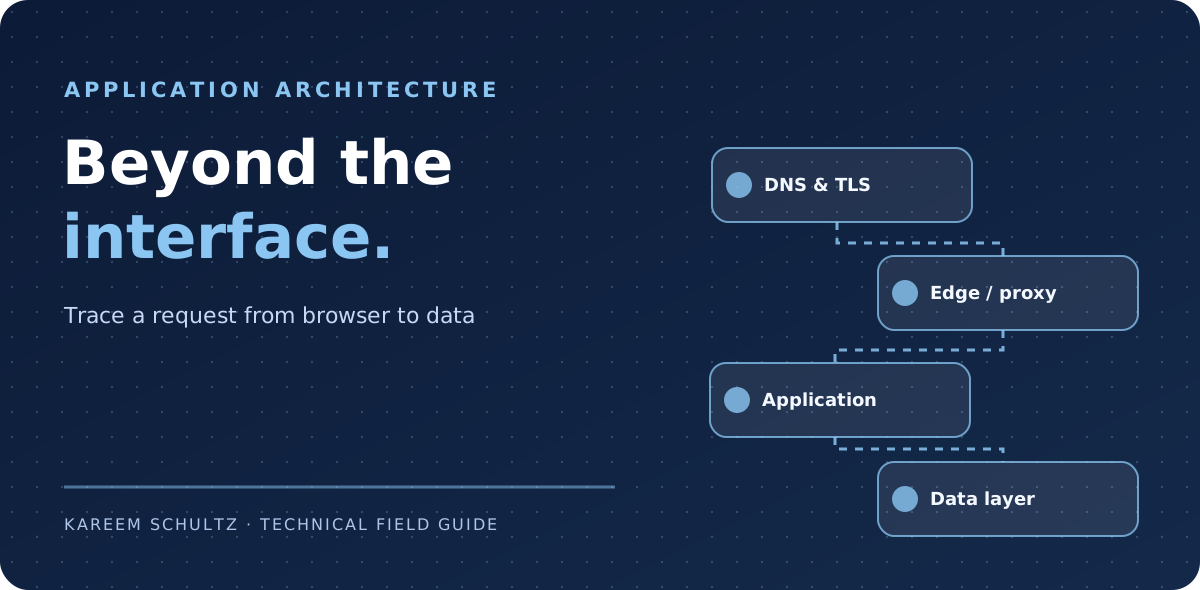
Trace a web request through DNS, TLS, proxies, the application and its database, then follow the checks that make a release dependable.
Field notes / Technical writing
Networking, DNS, storage, security, CI/CD and useful software. Ideas and technical notes drawn from the things I work with and enjoy learning.
Subscribe by RSSTrace a web request through DNS, TLS, proxies, the application and its database, then follow the checks that make a release dependable.
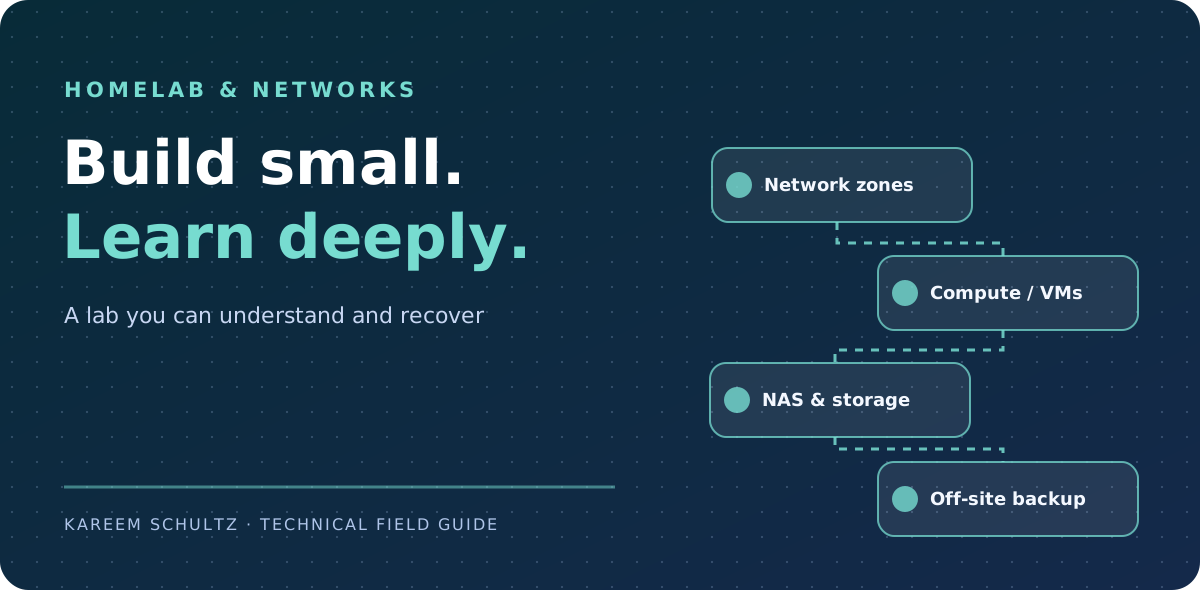
Build a small, intentional lab with VLANs, virtualization, NAS storage and recoverable backups—and learn from each failure without risking your everyday network.
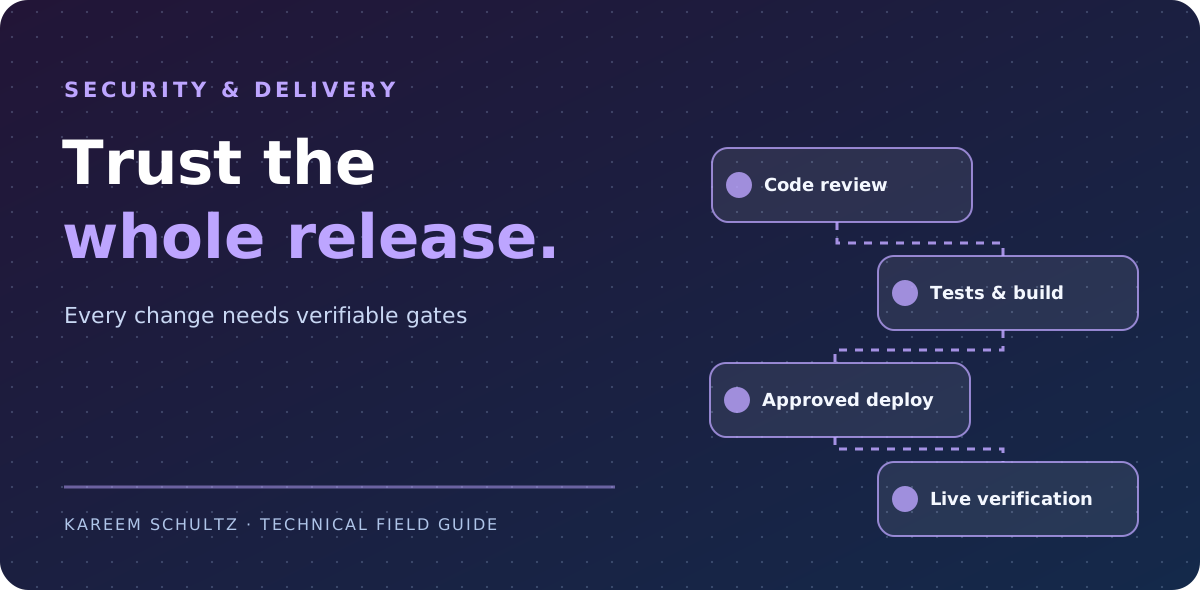
A practical release pipeline: least-privilege permissions, reviewed changes, reproducible builds, deployment approvals, live checks and a way back when things fail.
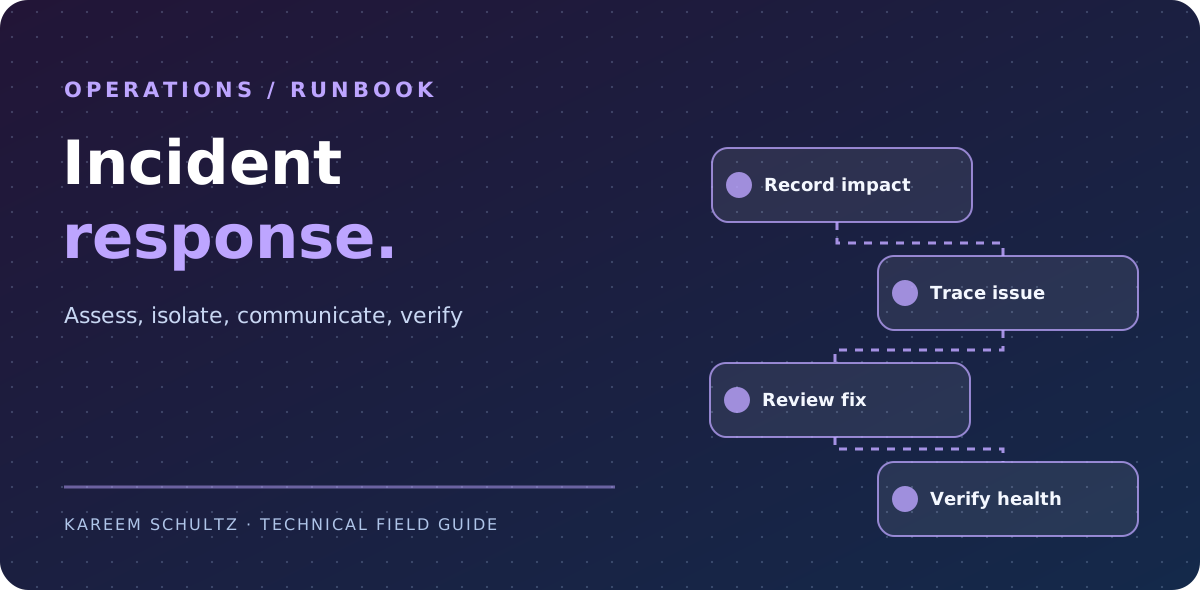
A practical, copyable, read-only-first incident checklist for DNS, TLS, proxy errors, origin health and communication—without restarting services at random.
A reusable go/no-go checklist for releases, with evidence, owner accountability, rollback dependencies and post-change verification.
A field guide for guest SSIDs, VLAN isolation, DNS, redirects, vouchers, captive portal authorizations and the symptoms users actually report.
Verify that a backup can actually restore a VM, application data and credentials—with a repeatable, documented recovery exercise.
How to inspect Ansible plans, Terraform/OpenTofu state and diffs, secrets, blast radius and drift before approving an infrastructure change.
WireGuard, IPsec/IKEv2, OpenVPN, legacy L2TP, overlays and zero-trust application access compared by architecture, use case and operational trade-offs.
Understand gzip, Brotli, Zstandard, modern image formats, delivery hints and realistic bundle-size measurements.
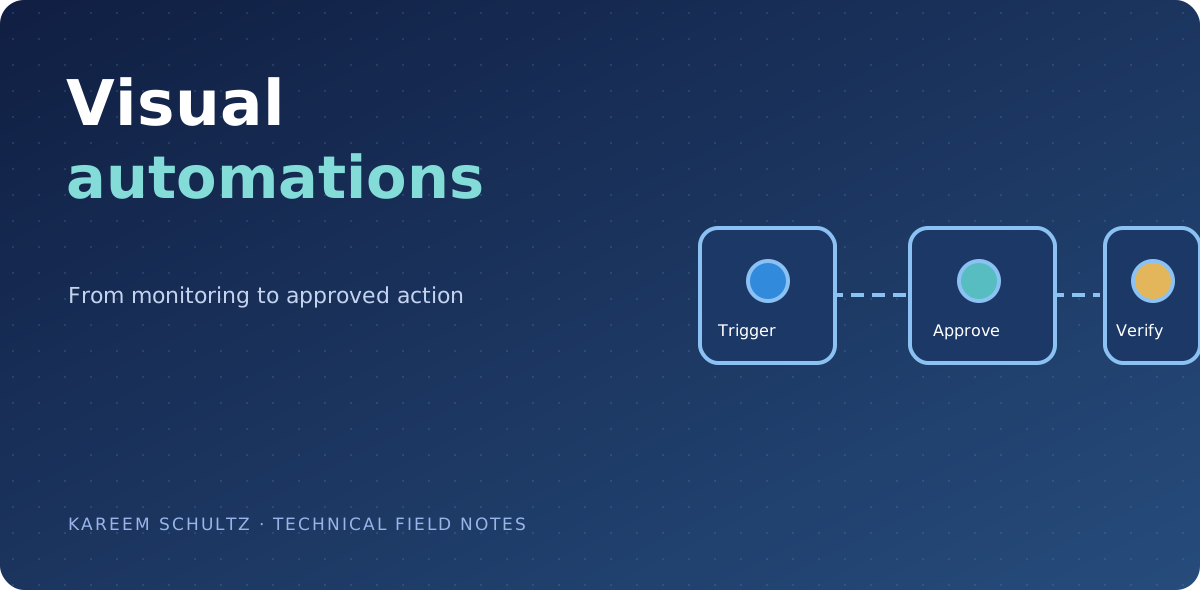
A visual, interactive example of how triggers, checks, approvals, Python, Ansible and infrastructure as code can fit together without giving an automation unnecessary power.
A practical, sourced explanation of CVE-2026-109618 and CVE-2026-109619: how PHP request cleanup became dangerous, which versions are fixed, and how operators can inventory, patch and investigate exposed servers.
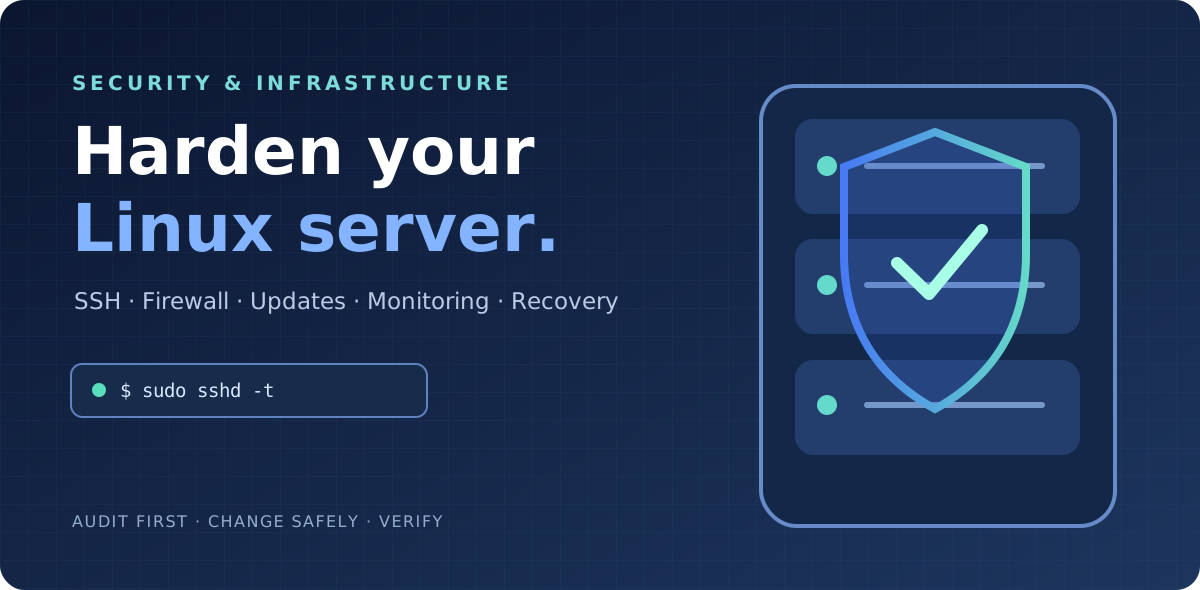
A step-by-step security baseline for Ubuntu servers: SSH access, sudo, UFW, updates, AppArmor, Fail2ban, logs, backups and recovery—with safe, copyable example commands.
In the notebook
Topics being researched, not published procedures or completed guides.
Benchmarking Core Web Vitals and client-side rendering under real network conditions.
Gather timeline evidence, root causes, operator actions and a blameless improvement plan.
A growing collection
The blog will grow with technical guides, lab ideas, engineering discoveries and useful applications. No private client details or fabricated results.